The Collective Voice for GI Cancers





















































2025 Stomach Cancer Advisory Board sponsored by Amgen, ASCO GI, San Francisco

Trusted Partners
Convening
United Voices
Collaborating
Strong Patients
Advocating
Empowered Professionals
Educating
Who We Are
We are the GI Cancers Alliance
The GI Cancers Alliance works to raise awareness, provide education, and advocate to prevent, treat, and cure gastrointestinal cancers through a collaboration between advocacy groups, industry, and institutional partners.
15
Professional Associations
120+
Advocacy Partners
12
Industry Sponsors



Awareness
Gastrointestinal Cancer Types





OUR PARTNERS
Thank You to our Sponsors













Education
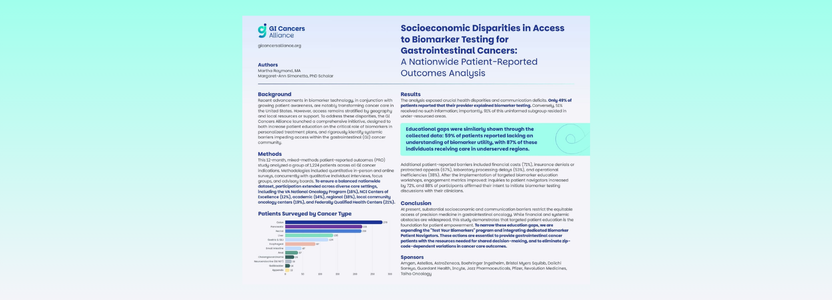
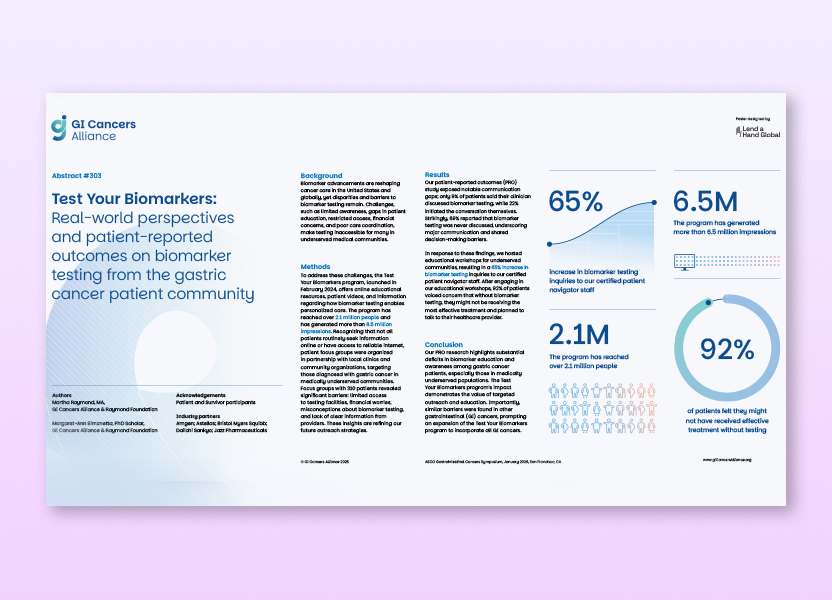
Test Your Biomarkers
Before patients begin a treatment plan, it's important to ask about biomarkers. Biomarkers can help you understand what your tumor is made of, and they can also let you know what treatments you may qualify for or which treatments are unlikely to work. Many clinical trials are designed around biomarkers. The first step is getting tested.